The full story
The challenge
Personal trainers are skilled professionals running small businesses. Most of them are also running those businesses on a collection of tools held together by habit.
A client’s programme lives in a shared Google Doc. Progress notes are in a notebook. Check-ins happen over WhatsApp. Payments get chased by text message. Scheduling lives in a personal calendar with no connection to anything else.
It works until it does not. A client misses a session because the booking was in the wrong calendar. A programme update goes to the wrong thread. A trainer spends forty minutes on admin for every hour they spend coaching.
The person who brought Fitly to us had lived this problem. They wanted a platform that gave trainers the tools to run a proper client business, and gave clients a clean, engaging experience on their phone. Two very different user types. One coherent product.
The solution
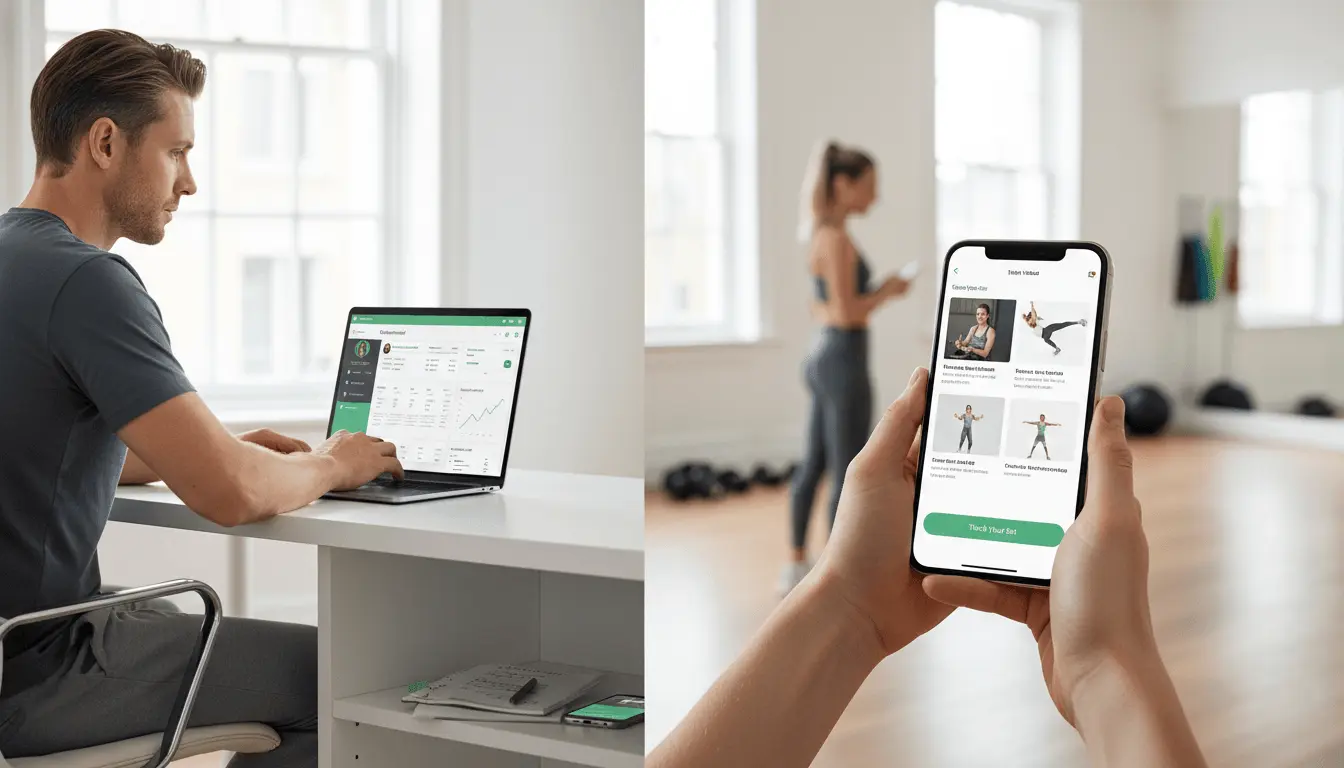
Fitly is a two-sided platform. The trainer side is a web-based management tool. The client side is a mobile app. Both connect to the same underlying system, so changes a trainer makes appear for the client straight away.
On the trainer side, we built a client management interface that holds contact details, session history, programme versions, and progress data in one place. Programme building is structured but flexible. A trainer selects exercises from a searchable library, sets parameters for sets, reps, rest, and load, and sends the programme to the client with one action. Templates let trainers save and reuse programme structures across multiple clients.
Progress tracking updates automatically from what clients log in the app. Trainers do not need to ask. The data is there when they open the client record.
On the client side, the mobile app shows each person’s upcoming schedule, their current programme with clear instructions for each exercise, and a log for recording completed sessions. Progress is displayed simply. The experience is designed for someone who wants to train, not someone who wants to learn new software.
Payments, scheduling, and messaging all sit inside the platform. A trainer can manage a full client roster without opening a second tab.
We built Fitly iteratively, running each section past real trainers before moving on. The exercise library alone went through three rounds of structural changes based on feedback from people who build programmes daily.
The result
Trainers who used the platform during testing described the shift as having a proper business system for the first time. Everything was in one place. Programmes were easier to build and easier to update. Progress was visible without a separate conversation.
Clients engaged with their programmes more consistently when they could access them on their phone at any time. Having a real training app rather than a shared document made the early weeks of a programme feel more intentional.
Admin time dropped sharply. Scheduling, programme delivery, and progress tracking were no longer separate manual jobs. The platform handled the handoffs.
Fitly continues to develop with features added based on what trainers and clients ask for in practice. The foundation was built to support that growth without structural changes.
If you have a two-sided product idea or a professional service business that needs a proper digital platform, we would like to hear about it.
What changed
After go-live, the shift showed up in the week first. Then it showed up in the numbers. Here is what that looked like on the ground.
replacing a dozen disconnected tools
instead of hours editing documents
without trainers chasing for updates
How we approached this